Canadian Dental Care Plan (CDCP): eligibility checker
Short answer
The Canadian Dental Care Plan (CDCP) helps pay for dental care for people with no dental insurance and an adjusted family net income under $90,000. Under $70,000 it pays all of its set fees. From $70,000 to $89,999 you pay part (a co-payment).
- What it is
- A federal dental plan. It pays dentists and other oral health providers directly for covered care, such as exams, cleanings, fillings, root canals and dentures.
- Who it helps
- Canadian residents of any age who cannot get dental insurance through work, a pension, a family member, a school or professional group, or a health spending account.
- When to use it, and the catch
- Apply for the 2026–27 benefit period, and renew each year. The catch: any access to dental insurance rules you out, even if you do not use it, and your dentist can charge more than the CDCP fee.
Example: Lina and Omar have no dental insurance and a family net income of $75,000. They qualify. The plan pays 60% of its set fees; they pay the other 40%, plus anything the dentist charges above the CDCP fee.
CDCP eligibility checker
Runs in your browser. Nothing is saved or sent.
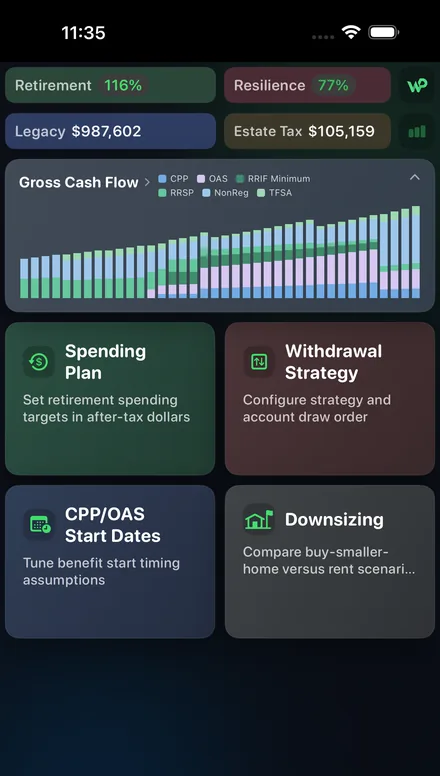
Will your net worth last?
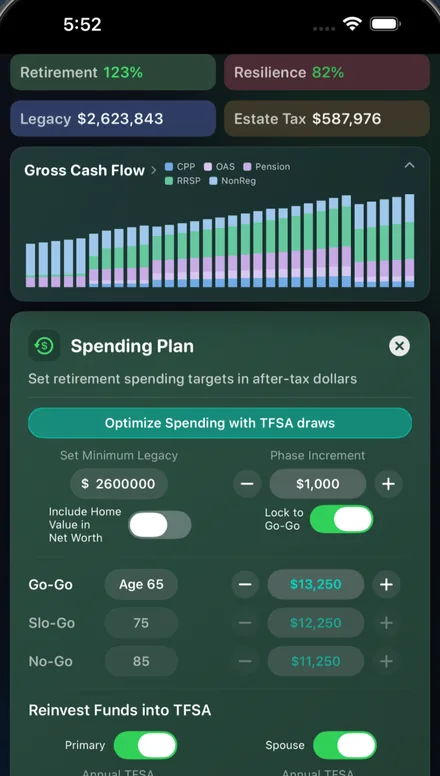
How much you can spend monthly
A guide for education, not advice. Service Canada decides who qualifies.
Co-payments by family income
| Adjusted family net income | CDCP pays | You pay |
|---|---|---|
| Under $70,000 | 100% | 0% |
| $70,000 to $79,999 | 60% | 40% |
| $80,000 to $89,999 | 40% | 60% |
| $90,000 or more | Not eligible |
How this is calculated / assumptions
- The 4 requirements: no access to private dental insurance, you and your partner filed your tax returns in Canada, adjusted family net income under $90,000, and you are Canadian residents for tax purposes.
- Adjusted family net income = your and your partner’s line 23600, less any UCCB and RDSP income (plus amounts repaid).
- Percentages are of the CDCP’s set fees. Your provider can charge more, and some services need approval first. Orthodontics are not currently covered.
- Government dental programs (provincial, territorial or federal) do not rule you out; the plans coordinate.
Sources
Sources (checked 29 September 2026): the 4 requirements, the retiree exception and the T4/T4A codes from Service Canada’s Canadian Dental Care Plan: Do you qualify; covered services and co-payments from What services are covered in the Canadian Dental Care Plan; the 2026–2027 benefit period from the Canadian Dental Care Plan overview.
FAQ
- Who qualifies for the Canadian Dental Care Plan?
- Canadian residents with no access to private dental insurance, who (with their partner) filed their tax returns in Canada, and whose adjusted family net income is under $90,000.
- How much does the CDCP pay?
- All of its set fees if your adjusted family net income is under $70,000, 60% from $70,000 to $79,999, and 40% from $80,000 to $89,999. Providers may charge more than the CDCP fee.
- Can I get the CDCP if I have dental insurance but do not use it?
- No. Service Canada says any access to dental insurance rules you out, even if you never use it or chose not to enrol. Retirees who opted out of pension dental coverage before December 11, 2023 and cannot opt back in are the exception.
Full guide
The Canadian Dental Care Plan (CDCP) is federal help with oral health costs; this page covers who is eligible and how to apply. Related: the Canada Child Benefit, the GST/HST credit, the Canada workers benefit, the Disability Tax Credit, CRA My Account, and the basic personal amount.
What the Canadian Dental Care Plan is
On the Government of Canada’s Canadian Dental Care Plan hub, the Canadian Dental Care Plan (CDCP) helps make the cost of dental care more affordable for eligible Canadian residents. Service Canada assesses eligibility and applications. Health Canada’s December 2023 plan overview states that once someone is eligible, Service Canada shares applicant information with Sun Life, the contracted service provider, for enrolment; Sun Life then sends a welcome package with coverage details, a member card, and the coverage start date. Confirm live rules and intake windows on Canada.ca before you apply or book care.
Eligibility themes (published requirements)
Canada.ca’s Do you qualify guide says you must meet all four requirements to apply:
- No access to private dental insurance or coverage—including health spending accounts that cover dental costs, coverage through your (or a family member’s) work or pension plan, a professional or student organization, or insurance purchased for dental costs. Opting out or never using coverage still counts as access in most cases; Canada.ca describes a narrow exception for retirees who opted out of pension dental coverage before December 11, 2023 and cannot opt back in.
- File your tax return in Canada—you and your spouse or common-law partner (if applicable) must have filed so family income for the previous year can be assessed.
- Adjusted family net income less than $90,000—Canada.ca publishes this threshold on the same qualify page. Adjusted family net income starts from family net income (line 23600), subtracts UCCB and RDSP income (lines 11700 and 12500), and adds UCCB and RDSP amounts repaid (lines 21300 and 23200).
- Canadian resident for tax purposes—you and your spouse or common-law partner (if applicable).
Coverage through a provincial, territorial, or federal government social program does not automatically block CDCP; Canada.ca says you could still qualify, with plans coordinating to avoid duplication. You must confirm every year that you have no access to private dental insurance. False information can remove you from the plan and may require reimbursement.
How to apply (Service Canada; Sun Life enrolment)
The Apply page states applications are open for the 2026-2027 benefit year. Meet all four eligibility requirements first. Online, sign in to My Service Canada Account (MSCA), open the Canadian Dental Care Plan section, and choose apply. If you cannot use MSCA or Canada.ca, call Service Canada at 1-833-537-4342 (TTY 1-833-677-6262). You’ll need identity and contact details (SIN, date of birth, name, addresses), any government social-program dental coverage, and prior-year notices of assessment for you and your spouse or common-law partner when applicable. Canada.ca warns that CDCP will never ask you to pay to apply or renew—treat payment requests as scams. After approval, enrolment and the welcome package are handled through Sun Life as described on government pages; schedule care only on or after your coverage start date.
What’s covered at a high level
Canada.ca’s What services are covered guide says the plan helps pay a portion of a wide range of oral health services when recommended by a provider. At a high level, published categories include diagnostic and preventive care (exams, x-rays, cleaning/scaling, fluoride, sealants); basic restorative, endodontic, and periodontal care; major restorative work and removable prosthodontics (such as dentures); oral surgery; and anesthesia or sedation. Some services need preauthorization. Orthodontic services are currently not available on that page. Fee schedules and Dental Benefit Grids are omitted here—confirm codes, frequencies, and fees on Canada.ca with your provider.
On the same coverage page, co-payments are tied to adjusted family net income at CDCP established fees: lower than $70,000 → CDCP covers 100% of those fees (you cover 0%); $70,000–$79,999 → CDCP 60% / you 40%; $80,000–$89,999 → CDCP 40% / you 60%. You may still owe extra if charges exceed CDCP fees or for uncovered services. Only providers are reimbursed; do not pay the full cost upfront for covered care.
Tax filing and related Canada benefits
CDCP income testing relies on filed returns and CRA lines such as net income. Keep filings current for benefits like the Canada Child Benefit, GST/HST credit, and Canada workers benefit, and for credits such as the Disability Tax Credit and basic personal amount. Review slips and notices in CRA My Account before you attest to income or insurance access on a CDCP application.
Model tax cash flow on-device
WisePlan Wealth is an on-device Canada retirement planner. After you file, line up benefits and dental costs beside the rest of your plan. Free to start. No account. Data stays on the device.
Source: Canada.ca, checked Oct 2026.
This is general information, not financial, tax, investment, legal, dental, or accounting advice. The Canadian Dental Care Plan is administered under published Canada.ca / Health Canada / Service Canada guidance and can change. Confirm current eligibility, income thresholds, co-payments, covered services, and application windows on Canada.ca or with a qualified professional. Page dated 3 September 2026.