Federal income tax calculator (2026 brackets)
Short answer
For 2026, federal tax is 14% on the first $58,523 of taxable income, 20.5% up to $117,045, 26% up to $181,440, 29% up to $258,482 and 33% above. Each rate applies only to the income in its bracket, and the basic personal amount ($16,452) is tax-free.
- What it is
- The federal part of your income tax. Your province or territory adds its own tax on top.
- Who it helps
- Anyone with Canadian taxable income who wants to know their federal tax, their rate on the next dollar and their overall rate.
- When to use it, and the catch
- For planning a raise, an RRSP deduction or a withdrawal. The catch: the lowest rate was 14.5% for 2025 (15% cut to 14% on July 1, 2025), so 2025 returns use different numbers.
Example: Jordan earns $80,000 in 2026 as an employee. Bracket tax is $12,596; the basic personal and Canada employment amounts take off $2,513, so federal tax is about $10,083. The next dollar is taxed at 20.5%, and the average rate is 12.6%.
Federal tax calculator
Runs in your browser. Nothing is saved or sent.
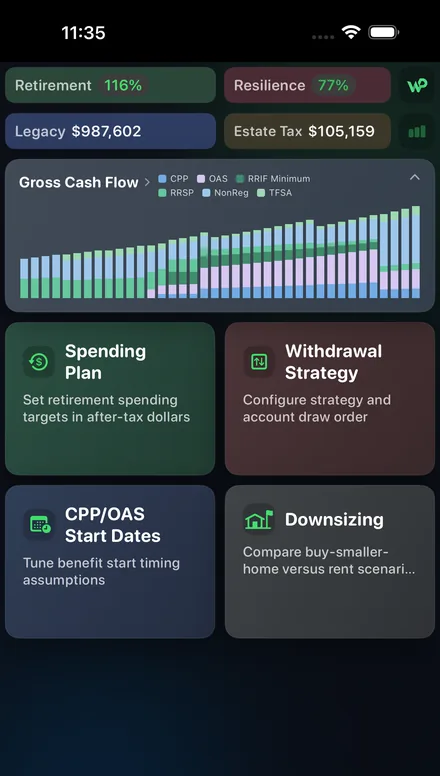
Will your net worth last?
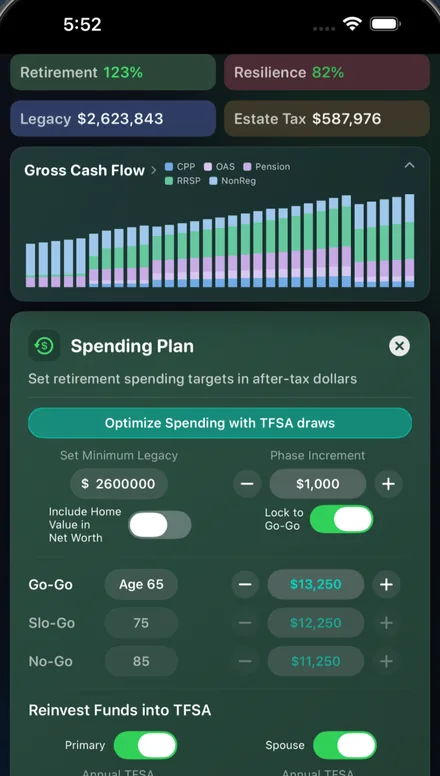
How much you can spend monthly
An estimate for education, not tax advice. Your notice of assessment shows your actual tax.
Wondering how retirement income is taxed? See retirement income planning in Canada and the 7-step guide to retirement planning in Canada.
Federal tax at other incomes
| Taxable income | Federal tax | Marginal | Average |
|---|
How this is calculated / assumptions
- 2026 brackets: 14% to $58,523; 20.5% to $117,045; 26% to $181,440; 29% to $258,482; 33% above. 2025: 14.5% to $57,375; 20.5% to $114,750; 26% to $177,882; 29% to $253,414; 33% above.
- Credits subtracted: the basic personal amount ($16,452 for 2026, $16,129 for 2025, shrinking to $14,829 / $14,538 between the 29% and 33% thresholds) and, if employed, the Canada employment amount ($1,501 / $1,471), at the lowest rate (14% for 2026, 14.5% for 2025).
- Other credits (CPP and EI contributions, age, pension, medical, donations) and the dividend tax credit would lower your tax further. The top-up tax credit (line 34990) only matters if your credits add up to more than the first bracket.
- Marginal rate is the federal bracket rate on your next dollar (0% while the basic personal amount covers your income). Average rate = federal tax ÷ taxable income.
- Provincial or territorial tax, Quebec abatement and alternative minimum tax are not included.
Sources
Sources (checked 29 September 2026): CRA’s Current year tax rates and income brackets (2026); Last year tax rates and income brackets (2025); Indexation adjustment for personal income tax and benefit amounts; Line 34990, Top-up tax credit.
FAQ
- What are the federal tax brackets for 2026?
- 14% on taxable income up to $58,523; 20.5% from $58,523 to $117,045; 26% to $181,440; 29% to $258,482; and 33% above $258,482.
- Why was the lowest federal rate 14.5% for 2025?
- The rate was cut from 15% to 14% on July 1, 2025. Tax is calculated for the whole year, so 2025 uses a blended 14.5%. From 2026 it is 14% for the full year.
- What is the difference between marginal and average tax rate?
- Your marginal rate is the rate on your next dollar of income. Your average rate is your total tax divided by your income, which is always lower because the lower brackets and the basic personal amount apply first.
Full guide
This guide summarises the Canada Revenue Agency’s published federal personal income tax brackets—year-labelled rates and dollar thresholds only—from CRA’s Current year tax rates and income brackets (2026) and Last year tax rates and income brackets (2025) pages, with the mid-year lowest-rate change explained from Finance Canada / CRA sources. Related: basic personal amount, Canada employment amount, age amount, CRA My Account, notice of assessment, and alternative minimum tax.
How federal brackets work (progressive tax)
CRA’s tax-rates hub states that provincial or territorial income tax rates apply in addition to federal income tax rates. The rates are split into income brackets. Each rate applies only to the corresponding income bracket, not to all income—so moving into a higher bracket does not re-tax your entire taxable income at the higher rate.
Your federal tax is calculated on taxable income for the tax year. Credits such as the basic personal amount (line 30000), Canada employment amount, and age amount reduce federal tax payable after bracket tax is computed; they are not “extra brackets.” Review slips and results in CRA My Account; assessed figures also appear on your notice of assessment.
Federal tax brackets for 2026 (CRA current year)
Per CRA’s Current year tax rates and income brackets (2026) page:
- For income earned in: 2026
- Applied to: 2026 tax return (to be filed in 2027)
| Taxable income portion (2026) | Federal rate |
|---|---|
| $0 to $58,523 | 14% |
| $58,523.01 to $117,045 | 20.5% |
| $117,045.01 to $181,440 | 26% |
| $181,440.01 to $258,482 | 29% |
| $258,482.01 and over | 33% |
CRA also notes that income bracket thresholds increase based on inflation each year (see CRA’s indexation adjustment materials). CRA payroll guidance cites a federal indexing factor of 2.0% for January 1, 2026. For 2026 and subsequent years, the lowest federal rate is 14% (full-year), matching the CRA current-year table above.
Federal tax brackets for 2025 (CRA last year)
Per CRA’s Last year tax rates and income brackets (2025) page:
- For income earned in: 2025
- Applied to: 2025 tax return (to be filed in 2026)
| Taxable income portion (2025) | Federal rate |
|---|---|
| $0 to $57,375 | 14.5% |
| $57,375.01 to $114,750 | 20.5% |
| $114,750.01 to $177,882 | 26% |
| $177,882.01 to $253,414 | 29% |
| $253,414.01 and over | 33% |
The 14.5% lowest rate for 2025 is the CRA full-year rate after a mid-year policy change. Finance Canada’s May 2025 middle-class tax cut notice and CRA “What’s new for 2025” state that the lowest individual rate was reduced from 15% to 14% effective July 1, 2025. Because income tax is calculated annually, the full-year lowest rate for 2025 is 14.5%; the full-year rate for 2026 and later is 14%. Use the CRA last-year table when preparing a 2025 return.
Side-by-side federal thresholds (year-labelled)
| Bracket (federal) | 2025 threshold (CRA) | 2026 threshold (CRA) | 2025 rate | 2026 rate |
|---|---|---|---|---|
| 1st | up to $57,375 | up to $58,523 | 14.5% | 14% |
| 2nd | to $114,750 | to $117,045 | 20.5% | 20.5% |
| 3rd | to $177,882 | to $181,440 | 26% | 26% |
| 4th | to $253,414 | to $258,482 | 29% | 29% |
| 5th | over $253,414 | over $258,482 | 33% | 33% |
Dollar thresholds and rates above are quoted only with the CRA year labels shown. Confirm Canada.ca when you file—indexation and legislation can update published figures.
Provincial and territorial brackets are separate
CRA’s current-year and last-year pages state that the provincial or territorial rate is determined by your province or territory of residence on December 31 of the tax year, and that those rates apply in addition to federal rates. Each province and territory publishes its own brackets; Quebec residents follow Revenu Québec for provincial income tax. For provincial figures, use CRA’s tax-rates pages, your Form 428 or Revenu Québec.
Credits, AMT, and what brackets do not include
Federal brackets are only one step. Non-refundable credits (for example the basic personal amount, Canada employment amount, and age amount) reduce federal tax after bracket tax is calculated. Alternative minimum tax is a separate federal calculation for certain taxpayers—not a sixth ordinary bracket.
Retired? See how much tax you will pay in retirement in Canada, with federal and provincial tax, the age amount and the pension income amount in one calculator.
Keep taxable income beside your retirement plan
WisePlan Wealth is an on-device Canada retirement planner. If you model RRSP, TFSA, CPP, OAS, and other cash flows, put those years beside taxable income and the federal brackets that apply—and next to guides on the basic personal amount, Canada employment amount, age amount, CRA My Account, notice of assessment, and alternative minimum tax. Free to start. No account. Data stays on the device.
Source: Canada.ca, checked Oct 2026.
This is general information, not financial, tax, investment, legal, or accounting advice. Federal tax rates and income brackets are set by legislation and administered by the CRA and can change. Confirm current-year and last-year tables, indexation, and any provincial or territorial rates on Canada.ca or with a qualified professional. Page dated 4 September 2026.