Medical expense tax credit calculator (2026)
Short answer
You get tax back on medical costs above a threshold: 3% of your net income, or $2,890 for 2026 if that is less. The part above it comes off your federal tax at 14%.
- What it is
- A federal tax credit for medical costs you paid and were not paid back for. Net income means your income on line 23600 of your tax return, before most credits.
- Who it helps
- Anyone with big medical, dental, or vision bills in a year, and families: one partner can claim for both of you and your children under 18.
- When to use it, and the catch
- When you file. You can pick any 12-month period that ends in the tax year. The catch: the first 3% of income (up to $2,890) does not count, and the credit cannot take your tax below zero.
Example: Pauline’s net income is $55,000 and her family paid $6,300 in medical costs. Her threshold is 3% of $55,000 = $1,650. She can claim $4,650, which takes about $651 off her federal tax.
Medical expense tax credit calculator
Runs in your browser. Nothing is saved or sent.
Will your net worth last?
How much you can spend monthly
An estimate for education, not tax advice.
Table by medical costs
| Medical costs | You can claim | Federal credit |
|---|
How this is calculated / assumptions
- Threshold = the smaller of 3% of net income or $2,890 (2026). For 2025 returns the cap is $2,834.
- Credit = amount you can claim × 14%, the lowest federal rate for 2026. Provinces give their own credit too; not included.
- This covers costs for you, your partner and your children under 18 (line 33099). Other dependants, such as an adult child or parent, use line 33199 with its own calculation.
- Only costs nobody paid you back for count. Not sure an expense counts? Use our medical expenses checker.
Sources
Sources (checked 29 September 2026): how the claim works, the 3% rule, the 12-month period and CRA’s example, from Lines 33099 and 33199 – Eligible medical expenses (tax year 2025); 2026 amounts from CRA’s Indexation adjustment for personal income tax and benefit amounts: $2,890 for 2026 and $2,834 for 2025; 2026 federal rates from CRA’s Current year tax rates and income brackets (2026).
FAQ
- How is the medical expense tax credit calculated?
- Add up eligible medical costs for any 12-month period ending in the year. Subtract the smaller of 3% of your net income or $2,890 (2026). The rest is multiplied by 14% to give your federal credit.
- Should the lower-income spouse claim medical expenses?
- Often yes. The threshold is 3% of the claimer’s net income, so a lower income means a lower threshold and a bigger claim. The claimer still needs enough tax to use the credit.
- What is the medical expense threshold for 2026?
- The lesser of 3% of your net income or $2,890. For 2025 returns it is the lesser of 3% or $2,834.
Full guide
This page is CRA’s federal medical expense tax credit on lines 33099 and 33199—not the Disability Tax Credit. Related: RDSP, Canada Disability Benefit, Age amount, Basic personal amount, and GIS.
A non-refundable credit above a threshold
CRA’s guide Medical Expenses 2025 (RC4065): “The medical expense tax credit is a non-refundable tax credit that you can use to reduce the tax that you paid or may have to pay.” You claim eligible expenses on line 33099 or line 33199 under Step 5 – Federal tax. Finance Canada’s 2026 tax expenditures report describes the credit as the lowest personal income tax rate applied to qualifying medical expenses in excess of the lesser of 3% of net income and the indexed dollar ceiling. Provincial or territorial Form 428 amounts differ by jurisdiction and are omitted here.
The 3% threshold and the published dollar cap
Only the eligible medical expenses above a threshold count toward the federal credit. CRA’s lines 33099 and 33199 page (tax year 2025) and RC4065: subtract the lesser of:
- 3% of net income (line 23600), or
- the published dollar cap for that tax year.
| Tax year | Dollar cap (3% of net income ceiling) | Source |
|---|---|---|
| 2025 | $2,834 | CRA lines 33099/33199 page; RC4065 |
| 2026 | $2,890 | CRA indexation chart (“Medical expense tax credit (3% of net income ceiling)”) |
CRA’s tax tip: it may be better for the spouse or common-law partner with the lower net income to claim, because 3% of a lower line 23600 is a smaller threshold. For line 33199 (other dependants), CRA uses 3% of the dependant’s net income or the same dollar cap, whichever is less—calculated separately for each dependant.
Line 33099 vs line 33199
CRA’s lines 33099 and 33199 page:
- Line 33099 — medical expenses you or your spouse or common-law partner paid for yourself, your spouse or common-law partner, and your or your spouse’s or common-law partner’s children who were under 18 at the end of the tax year.
- Line 33199 — the allowable amount for other dependants who depended on you for support: children 18 or older (or grandchildren), and parents, grandparents, brothers, sisters, uncles, aunts, nephews, or nieces who were residents of Canada at any time in the year.
Any 12-month period ending in the tax year
CRA (lines 33099/33199 and RC4065 for 2025): you can claim eligible medical expenses paid in any 12-month period ending in 2025 that you (or anyone else) did not claim in 2024. The period does not have to be the calendar year—CRA’s example uses July 1, 2024 to June 30, 2025. For a person who died in 2025, CRA allows expenses paid in any 24-month period that includes the date of death if they were not claimed for any other year. Keep receipts; do not send them with the return unless CRA asks.
Not the Disability Tax Credit
The Disability Tax Credit is a separate federal non-refundable credit (Form T2201) for a severe and prolonged impairment. METC is about eligible medical expenses above the 3% / dollar-cap threshold. Some METC items reference Form T2201 (for example certain attendant care or therapy), but DTC approval is not the same as an METC claim. An RDSP and the Canada Disability Benefit are separate programs often discussed alongside DTC. The age amount, basic personal amount, and GIS are also separate from METC.
Model medical costs beside net income
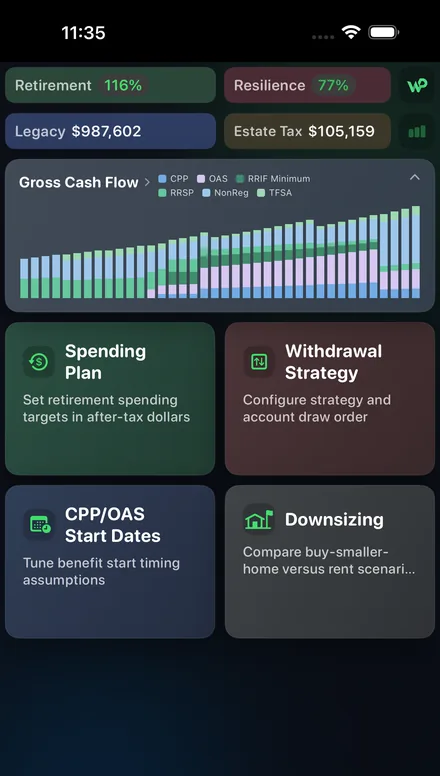
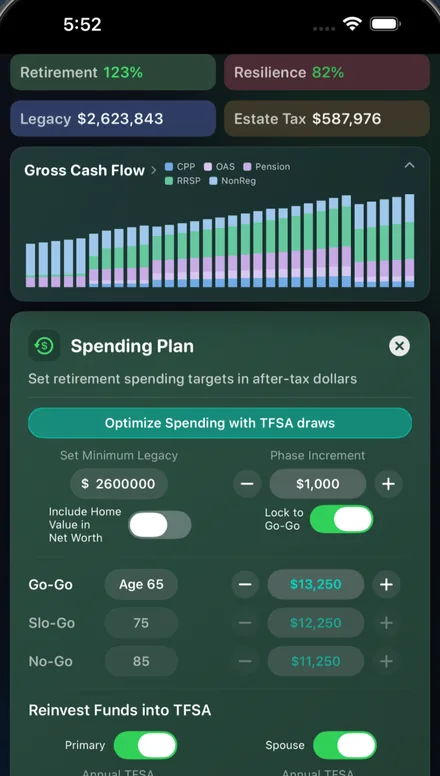
WisePlan Wealth is an on-device Canada retirement planner. Enter RRSP, TFSA, CPP, and OAS cash flows so net income (line 23600) stays visible beside the METC threshold. Free to start. No account. Data stays on the device.
Source: Canada.ca, checked Oct 2026.
This is general information, not financial, tax, investment, legal, or accounting advice. Medical expense tax credit rules and figures are set by the CRA and can change. Confirm eligibility, lines 33099 and 33199, the dollar cap for the tax year you are filing, and any provincial Form 428 amount on Canada.ca or with a qualified professional. Page dated 3 September 2026.