T1 adjustment deadline calculator (10-year refund limit)
Short answer
You can ask the CRA to change a filed return and still get a refund for up to 10 calendar years after the end of that tax year. For a 2016 return, the last day is December 31, 2026. Online changes take about 2 weeks; mailing Form T1-ADJ takes about 19 weeks.
- What it is
- A request to correct a return the CRA has already assessed, online (Change my return or ReFILE) or on paper Form T1-ADJ.
- Who it helps
- Anyone who missed a slip, deduction or credit on a past return, or reported something wrong.
- When to use it, and the catch
- After your notice of assessment. The catch: the 10-year limit only stops refunds; you still have to report tax you owe, and interest grows until you pay.
Example: Aisha forgot $3,000 of medical expenses on her 2016 return. She has until Thursday, December 31, 2026 to ask for the change and get the refund; Change my return still covers 2016.
T1 adjustment deadline calculator
Runs in your browser. Nothing is saved or sent.
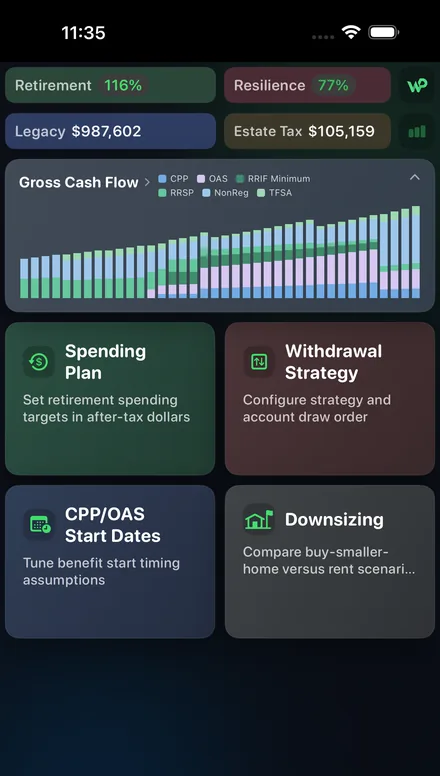
Will your net worth last?
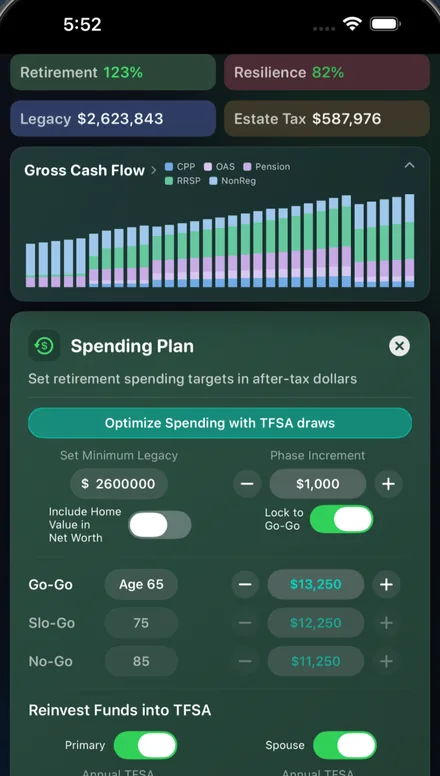
How much you can spend monthly
A date tool for education. The CRA’s notice of reassessment is final.
10-year refund deadlines
| Tax year | Last day to ask for a refund change | How |
|---|---|---|
| 2014 | December 31, 2024 (passed) | Mail only |
| 2015 | December 31, 2025 (passed) | Mail only |
| 2016 | December 31, 2026 | Change my return or mail |
| 2017 | December 31, 2027 | Change my return or mail |
| 2020 | December 31, 2030 | Change my return or mail |
| 2025 | December 31, 2035 | ReFILE, Change my return or mail |
How this is calculated / assumptions
- Refund limit: the CRA can’t issue a refund for an adjustment request made more than 10 calendar years after the end of the tax year (so by December 31 of the tenth year after it).
- Online options: Change my return covers 2016 and later; ReFILE covers 2022 to 2025 this season. 2015 and earlier go by mail on Form T1-ADJ.
- Processing: online within 2 weeks; by mail within 19 weeks of receipt; up to 35 weeks for years beyond the normal 3-year reassessment period, multiple years, bankruptcy, deceased taxpayers, loss carrybacks, pension splitting, or when the CRA asks for more documents.
- Normal reassessment period (the “Reassessment ends” tile): generally 3 years from the date of the original notice of assessment for individuals (Income Tax Act s.152(3.1)). The CRA can still accept changes after it; they just take longer.
- You can’t use a change request to apply for benefits, make or revise an election, move a refund to another CRA account, or update personal details.
Sources
Sources (checked 29 September 2026): CRA’s Changing a tax return; Form T1-ADJ, T1 Adjustment Request.
FAQ
- How far back can I change my tax return in Canada?
- You can ask for changes to any year, but the CRA can only issue a refund if you ask within 10 calendar years after the end of that tax year. For a 2016 return, that means by December 31, 2026.
- How long does a T1 adjustment take?
- About 2 weeks online (Change my return or ReFILE) and about 19 weeks by mail. Some requests, such as years beyond the normal 3-year period, can take up to 35 weeks.
- Can I still change my 2015 return?
- Only by mail on Form T1-ADJ, and the CRA can no longer pay a refund for 2015: the 10-year limit ended December 31, 2025.
Full guide
This guide summarises CRA’s Changing a tax return page, Form T1-ADJ, T1 Adjustment Request (form; PDF t1-adj-23e), and CRA’s May 2026 tax tip. It contrasts a routine adjustment with a notice of objection. Related: notice of assessment, CRA My Account, ReFILE, tax filing deadlines, and RRSP contribution room.
Adjustment request vs notice of objection
These are different CRA paths:
- T1 adjustment / Change my return / Form T1-ADJ (this page) — you ask CRA to correct amounts or missing information on a return you (or your preparer) already filed and that CRA has assessed. Typical examples: a late T4 or RRSP receipt, forgotten childcare or medical amounts, or income you omitted. CRA may issue a notice of reassessment (NOR).
- Notice of objection — the formal first step under the Income Tax Act when you believe CRA misinterpreted the facts or misapplied the law on an assessment, reassessment, or determination. That path has its own deadlines (see P148 on the objection guide) and goes to Appeals, not the routine change-return queue.
If you only need to correct errors or supply missing information, CRA points to changing the return rather than filing an objection. Service complaints and taxpayer relief (penalties and interest) are separate again.
Wait for your notice of assessment
CRA states you must wait until you receive your notice of assessment (NOA) before you can request a change. The return must have been filed by you or your tax preparer. If you already submitted a change request, wait until you get a CRA response before requesting additional changes to that return.
A change request is not a brand-new original filing. After review, CRA describes three outcomes: adjustments complete (a notice of reassessment (NOR)); some adjustments made (NOR plus an explanation); or no adjustments (a letter explaining why).
How to change a return (as CRA describes it)
CRA and its May 2026 tax tip list online options as faster than mail:
- Change my return in your CRA account (My Account) — for most tax situations when you have account access.
- ReFILE in certified tax software — when the return you are changing was sent with certified software. Professionals may use EFILE-certified software for ReFILE.
- Form T1-ADJ by mail — the paper T1 Adjustment Request when you cannot (or choose not to) use online options, or when CRA’s interactive “confirm which option you can use” tool points you to mail only.
Use CRA’s live chooser on the change-return page for your tax year and situation rather than guessing which channel applies.
Change my return in My Account (high level)
Per CRA:
- Sign in to your CRA account.
- Select Individual (your own return) or Representative (someone else’s).
- Select Tax returns.
- Find and select Change my return.
- Select the tax year you want to change and follow the steps.
- Save your confirmation number and summary of changes for your records.
Changing someone else’s return requires an authorized representative with at least level 2 access. Confirm current steps on Canada.ca before you submit.
When the paper Form T1-ADJ still applies
Complete Form T1-ADJ, T1 Adjustment Request and send it separately from your current-year return. CRA says to provide your SIN, the tax year, name and address, authorization details if applicable, adjustment details (including revised amounts), and a daytime phone number. Attach supporting documents for the entire amount—including amounts you already claimed but did not previously send documents for—and send the form plus documents to your tax centre.
For online requests, CRA only asks for supporting documents if it contacts you afterward with a case number; for mail, include documents with the T1-ADJ. CRA’s interactive chooser covers bankruptcy years, incorrect province/territory, deceased-taxpayer returns, international or non-resident returns, and Form T2203 situations—some have no online option. For the 2015 tax year or earlier, CRA states changes are by mail only, and a refund cannot be issued for an adjustment request made more than 10 calendar years after the end of the tax year.
What you can and cannot change (high level)
CRA says you can change a return if you need to adjust amounts or provide missing information, including reporting income (such as a T4 slip or tips), claiming a deduction, credit, or expense (such as childcare or medical costs), or adding a missing tax slip (such as an RRSP contribution receipt—see also RRSP contribution room).
You cannot use a change request to apply for benefits or credits; make or revise an election; allocate a refund to other CRA accounts; or update personal information (mailing or email address, direct deposit, marital status, or name)—use My Account for those updates. CRA also lists separate online-service exclusions for ReFILE and Change my return. This guide does not reproduce sample T1-ADJ worksheets or promise refunds.
Normal 3-year reassessment period (as CRA labels it)
On Changing a tax return, CRA refers to the normal 3-year reassessment period when listing slower categories such as “tax years beyond the normal 3-year reassessment period,” multiple returns, bankruptcy, deceased taxpayer, carrybacks, elected split-pension amounts, or CRA requests for more information. For individuals, CRA’s published Income Tax Act guidance generally describes a three-year window from the original notice of assessment (or notification that no tax is payable). Separately, a refund can’t be issued for an adjustment request made more than 10 calendar years after the end of the tax year. For penalties and interest relief, see taxpayer relief; for unreported income or assets, CRA points to the Voluntary Disclosures Program.
How long CRA says processing can take (2026 labels)
On Changing a tax return, CRA publishes: online within 2 weeks; mail (Form T1-ADJ) within 19 weeks of receipt; and certain complex requests may take up to 35 weeks. Confirm live figures with CRA’s Check CRA processing times tool. That CRA page also notes a ReFILE February 2 to 23, 2026 window for tax-year updates.
After the adjustment: notice of reassessment
When CRA accepts all or part of your request, the notice of reassessment (NOR) updates the relevant figures for that year. Keep it with your NOA records. If you still disagree with how CRA applied the law after the NOR, the path is usually a notice of objection—not another casual change request on the same disputed legal point. Filing-due dates that matter for some objection clocks are summarised on tax filing deadlines.
Keep refunds and balances beside your plan
WisePlan Wealth is an on-device Canada+US retirement planner. After a Change my return, ReFILE, or T1-ADJ request and your notice of reassessment settle, line up any refund or balance owing beside contribution room and the rest of your plan. Free to start. No account required—data stays on the device for privacy.
Source: Canada.ca, checked Oct 2026.
This is general information, not financial, tax, investment, legal, or accounting advice. Form T1-ADJ, Change my return, ReFILE, notice of reassessment, notice of objection, and related CRA procedures are administered under published Canada.ca guidance and can change. Confirm current eligibility, tax years, exclusions, forms, deadlines, and processing status on Canada.ca or with a qualified professional. Page dated 4 September 2026.